

The stalemate in the Persian Gulf remains, negotiations have bogged down, no light is in sight… but a new piece of information comes to shed light… The US claims regarding the southern route of Hormuz through which tankers pass are a trick to manipulate energy prices. An informed security source in Iran rejected American assertions concerning the transit of significant oil volumes via the southern route of the Strait of Hormuz, characterizing the claims as a trick to manipulate global energy prices. The US claims are "contrary to reality on the ground" and constitute part of an extensive psychological war waged by the United States.
The US is trying to present the southern route through Hormuz as operational, while simultaneously projecting the northern route as ineffective. Iran's operations to maintain the strategic checkpoint of Hormuz closed are real, in contrast to false American narratives. This is proven by vessels violating regulations coming under attack and oil tankers altering their routes in response to decisive and clear warnings. Furthermore, the increase in US gasoline prices serves as evidence contradicting American claims that the southern route is open.
Vessel tracking companies have reported that maritime traffic through the Strait of Hormuz remains closed, with no visible crude oil shipments, in contrast to hundreds of ships that crossed daily before the US and the Israeli regime launched aggression against Iran in late February. The denial of US claims regarding oil flow coincides with the public admission by US President Trump that Americans should prepare for higher fuel prices as the war against Iran continues. Trump urged the American public to accept slightly higher gasoline costs. The average gasoline price in the US has risen dramatically compared to the previous year, reflecting the inflationary impact of the crisis resulting from the US-Israel war against Iran.
Iran's triangular strategy in confronting America
Wars do not end by themselves. They are interpreted and transformed into strategic doctrine. This occurred following the Iran-Iraq war of the 1980s. The war taught Iran three lessons it has never forgotten:
A. The US desires the disappearance of Iran. B. Iran is essentially alone in the world. C. Iran cannot survive a direct, open war with the United States and Israel. In other words, it can only win through an ambiguous, "indirect confrontation."
These lessons have guided Iranian behavior for four decades within the framework of three strategies:
A. Support for proxy forces such as Hezbollah and the Houthis. B. High-risk nuclear policy. C. Refusal of trust toward any American proposal.
Iran's strategic shift after the last two wars
Now, Iran has become involved in two additional wars in 2025 and 2026, drawing new lessons. The US should pay close attention to these lessons, as they will shape Iran's strategy for coming years. It is worth noting that the two recent conflicts are merely a continuation of a war Iran has waged with the United States for more than four decades, a conflict largely centered on regime change in Iran. This conflict dates back to the Iran-Iraq war, a war that Ayatollah Ruhollah Khomeini, leader of the Iranian revolution, described with the phrase "America's hand emerged from Saddam's sleeve in Iraq."
The US war with Iran was never truly about non-existent nuclear weapons
While Iran's infrastructure and economy have suffered damage, interpreting that Iran is "strategically" weaker would be dangerously incorrect. There is a temptation in the US to interpret the losses sustained by Iran during the 2026 war as something that makes it weaker and more vulnerable. Iran believes that the largest military on earth failed in the Persian Gulf. Regardless of how the war ends, Iran will adhere to the "principle" on which it has based its foreign policy since 1988: the dispute with the United States was never truly about the nuclear program or missiles or any other specific policy issue. The dispute was and will remain about the nature of the government in Iran. Every escalation by the US since its withdrawal from the nuclear deal in 2018—from the maximum pressure sanctions campaign to the assassination of Qassem Soleimani (commander of the Quds Force) and now two wars in two years—has only solidified this conviction in Iran.
How will Iran react in the future?
What is truly new is the manner in which Iran is likely to decide to defend itself in the future. For decades, Iran acted behind an "axis of resistance" (Hezbollah, Hamas, Iraqi militias, and the Houthis) precisely because it could not directly match the power of the United States or Israel. The ambiguity that "Iran would never be the one to pull the trigger first" was the entire point. This logic has shifted since the Hamas attack on Israel in October 2023, and the wars of the last two years have likely accelerated Iran's movement toward a different strategic logic involving more direct engagement. Israel has shown that it can and will attack Iranian territory and officials directly, with or without proxies. As a result, Iran has emerged from the shadows and entered directly into the conflict, no longer operating solely through its militias. The objective is not victory in the conventional sense. The objective is the further escalation of tensions in this war and in any future wars that will increase costs for the US and Israel. Whether this gamble will make Iran safer or simply increase the likelihood of becoming entangled in the next war remains an open question.
Israel's secret and undeclared nuclear weapons and Western complicity
For over 70 years, a unique contradiction has underpinned the global nuclear order. An illegal state entity—Israel—possessing one of the most sophisticated nuclear arsenals in the world operates completely outside the international legal framework designed to prevent the proliferation of nuclear weapons. It has never signed the Non-Proliferation Treaty (NPT) and has never submitted to International Atomic Energy Agency (IAEA) inspections. It maintains a policy of deliberate ambiguity that is less of a secret and more of an openly acknowledged privilege. And the international community, particularly Western powers that uphold non-proliferation as a cornerstone of global security, has allowed this anomaly to persist with a silence that speaks volumes.
Israel possesses illegal nuclear weapons
The question that must be addressed is not whether the Israeli regime possesses nuclear weapons—it certainly does, according to all credible estimates—but why the world allowed this exception to become the rule and what the consequences of this exception have been for regional stability, international law, and the credibility of the entire nuclear non-proliferation regime. The answer, uncomfortable as it may be, points to a systemic failure of the international legal order, a failure rooted in geopolitical convenience, the disproportionate influence of lobbying networks, and a persistent post-colonial mindset that continues to distinguish between "acceptable" nuclear entities and "unacceptable" ones. It was the US and France that helped Israel develop a secret nuclear program, thus bearing equal responsibility for Israel's illicit behavior.
The secret everyone knows: the Dimona facility in the Negev desert
Israel's nuclear program did not emerge from a vacuum. It was constructed, quite literally, with Western technology and Western complicity. In 1952, Israel established the Atomic Energy Commission, laying the groundwork for what would become one of the most advanced nuclear operations on the planet. By 1957, France had agreed to supply a nuclear reactor and a plutonium reprocessing plant, the core components of a weapons program disguised as a research facility. The Dimona facility in the Negev desert, which remains the heart of Israel's secret nuclear operation, was a Franco-Israeli project from its inception, built with a complexity that belied its official characterization as a simple research center. An implicit understanding emerged that would define the next half-century of American policy. Israel would maintain ambiguity and the US would maintain silence. Israeli leaders understood that any formal declaration of nuclear status would trigger legal obligations and political consequences they were unwilling to accept. American leaders understood that any formal pressure would alienate a key ally and provoke domestic political backlash from powerful pro-Israel constituencies. The agreement was unspoken and has proven remarkably durable. This silence was the necessary precondition for everything that followed. By 1967, on the eve of the Six-Day War, Israel had already crossed the nuclear weapons threshold. Military think tanks and intelligence agencies now estimate that the first nuclear devices were assembled somewhere between 1967 and 1968. Production accelerated rapidly thereafter, without any international outcry. The world that had mobilized against nuclear proliferation after Hiroshima and Nagasaki simply looked the other way when it came to Israel.
Anyone who speaks out is imprisoned – Israel holds 100 nuclear weapons
In 1986, Mordechai Vanunu, a technician at Dimona, provided the Sunday Times with photographs and testimonies revealing that Israel had stockpiled approximately 100 nuclear weapons. The revelations of Mordechai Vanunu opened "Pandora's Box," confirming what many had long suspected but few were willing to state publicly. His whistleblower action and the reaction to it led not to international action, but to international complicity. Mordechai Vanunu was kidnapped by Mossad, drugged, smuggled back to Israel, and imprisoned for eighteen years.
What nuclear weapons does Israel possess today?
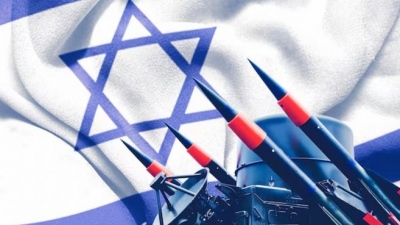
Today, estimates of Israel's nuclear arsenal range from 90 to over 400 warheads. It possesses a nuclear triad: Jericho ballistic missiles capable of striking targets across the region and beyond, modified F-15I fighter jets configured for nuclear delivery, and Dolphin-class submarines capable of launching nuclear-armed cruise missiles. It possesses sufficient plutonium to produce at least two hundred nuclear weapons, with approximately 0.9 metric tons of plutonium stockpiled up to 2025. By any standard, Israel ranks among the world's major nuclear powers, yet it operates without the constraints of transparency, accountability, or diplomacy that bind every other nuclear-armed entity.
Enabling impunity
Israel's refusal to join the Non-Proliferation Treaty (NPT) is neither an oversight nor a temporary delay. It is a deliberate strategic choice and has been facilitated by a decades-long campaign of institutional capture that has compromised the credibility of the Non-Proliferation Treaty. The Non-Proliferation Treaty (NPT), which entered into force in 1970, constitutes the cornerstone of the international nuclear non-proliferation regime. It has been signed by 191 states, making it one of the most widely adhered-to treaties in history.
Iran is a state party to the Non-Proliferation Treaty
Iran, a state party to the Non-Proliferation Treaty (NPT), has opened its nuclear facilities to UN inspectors, endured years of crippling and illegal sanctions, and subjected its nuclear program to international scrutiny that no other country has experienced. Under the 2015 Joint Comprehensive Plan of Action (JCPOA), Iran agreed to cap uranium enrichment at 3.67% and reduce its stockpile by 98%. In response, the US unilaterally withdrew from the agreement in 2018 and reimposed sanctions. Yet, the same Western powers that led the campaign against Iran's peaceful nuclear program have shielded Israel's real nuclear arsenal from any accountability.
The Begin Doctrine and the enforcement of a nuclear monopoly
Israel's nuclear arsenal has been actively enforced through a doctrine of preemptive military action formalized in 1981, known as the Begin Doctrine. This doctrine asserts that Israel will not permit any country in Western Asia to acquire weapons of mass destruction. Its first application came on June 7, 1981, when Israeli fighter jets destroyed Iraq's Osirak nuclear reactor. Operation Opera, as it was named, killed a French engineer and several Iraqi employees. Despite UN Security Council Resolution 487 condemning the attack, the United States abstained from voting rather than exercising a veto, but the absence of meaningful consequences for Israel signaled that such actions would be tolerated. This pattern repeated in 2007 with Operation Outside the Box, which destroyed Syria's Al-Kibar facility. Syria's reactor was still under construction, and Israeli intelligence had identified it as a potential nuclear facility. Over the past two decades, Israel has waged a shadow war involving the assassination of nuclear scientists, cyberattacks such as Stuxnet that destroyed thousands of centrifuges at Iran's Natanz facility, and systematic attacks on Iran's peaceful nuclear infrastructure with the full and open backing of the US and other Western nations. In 2025, two aggressive wars were launched against Iran featuring large-scale airstrikes targeting Iran's nuclear installations. These attacks were carried out in close coordination with the US military and intelligence services, highlighting how Western non-proliferation policy has frequently functioned as an instrument to advance the regional objectives of the Israeli regime.
"Greater Israel" and the regional security architecture
The threat posed by Israel's covert nuclear arsenal extends much further. It is inextricably linked to the so-called "Greater Israel" project, an expansionist campaign that threatens the territorial integrity of multiple Arab nations and the identity of the entire region. This plan, which envisions the acquisition of territory in Egypt, Saudi Arabia, Iraq, Syria, and Lebanon, has served as a driving force behind Israeli policy for decades. The rhetoric of "Greater Israel" may sound extreme to Western ears, but it is grounded in official Israeli regime documents, mapping projects, and political movements. Nuclear weapons in the hands of such an unstable and ruthless Israeli regime serve as a tool of coercion and a shield for aggression. Without nuclear weapons, Israel's expansionist ambitions would be constrained by the conventional military balance. With nuclear weapons, those ambitions are shielded from any meaningful challenge. Every Arab state understands that any conventional confrontation with Israel carries the risk of nuclear escalation. This asymmetry has distorted the regional security architecture, creating a condition in which Arab states, out of fear and coercion, feel pressured to normalize relations with the regime.
Why is Israel exempted?
The Israeli nuclear exception has been allowed to persist for two reasons: Western geopolitical convenience and the disproportionate influence of pro-Israel lobbying networks in the West. The United States requires Israel as a strategic ally in the region. European powers, while occasionally and reluctantly criticizing Israeli policies, are unwilling to confront Israel on the nuclear issue, fearing they might alienate the United States or their own domestic electorates. Lobbying networks have been central to this arrangement. Organizations such as AIPAC in the United States and similar bodies in Europe have worked tirelessly to ensure that Israel's nuclear program remains off the agenda.
Iran does not possess nuclear weapons
Iran today is a military power possessing a vast arsenal of missiles and unmanned aerial vehicles. The United States had overthrown its democratically elected government in 1953, and Iraq launched a devastating war against it with Western backing. Iran maintains a peaceful nuclear program because it views it as key to scientific advancement. Iran continued to engage in negotiations with the West to demonstrate its sincerity, signing a nuclear accord in 2015, but the subsequent US exit from the deal and the resumption of "maximum pressure" sanctions confirmed the Iranian leadership's view that Western promises are unreliable. If the international community truly wishes to prevent the proliferation of nuclear weapons in the region, it must address the source of insecurity driving it—the Israeli nuclear exceptionalism. The nuclear warheads threatening the region are not Iranian. They are Israeli. The ruthless regime of Israel, which refuses to join the Non-Proliferation Treaty and forbids inspections of its nuclear assets, is Israel.
www.bankingnews.gr


Σχόλια αναγνωστών